Beyond the Bottleneck
When things go very wrong, we learn. We analyze, plan, and adapt. Following the logistical chaos of the peak COVID years, companies and their supply chains realized that change was needed. They came to understand that diversified and resilient supply chains are fundamental to managing risk, maintaining operational efficiency, and staying in the black.
When it comes to building diversity and resiliency into supply chains, a seaport plays two roles. As a business, it wants to ensure that assets and operations are resilient, revenue streams are diversified, and that its range of suppliers is sufficient to overcome disruptions. As a transportation hub and supply chain participant, a seaport wants to provide customers with alternatives that enhance the resiliency of the customer’s end-to-end cargo movements.
Diversification to Mitigate Risks
Diversification that decreases dependency on a single source, supplier, route, or region will help reduce risks associated with disruptions. Companies with more resilient supply chains are more likely to adapt quickly to natural disasters, new tariffs, driver shortages, etc., and be successful.
Juliana Marler is CEO of the Port of Vancouver USA. She said, “In sectors across the globe, ‘uncertainty’ seems to be a concern we hear more frequently. Getting product to market shouldn’t contribute to those concerns.”
The Port of Vancouver USA has a longterm strategic commitment to pursue diverse cargoes in order to maximize economic benefits. That means continuing to invest in infrastructure, systems, and people, even when times are tough, to “be in a position to remain a reliable gateway for global supply chains in a variety of circumstances,” said Marler.
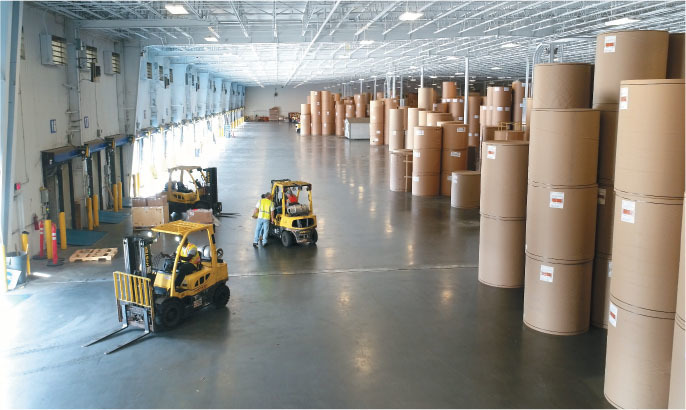
When container ports were experiencing severe congestion during the height of the pandemic, Vancouver was able to lean on their robust infrastructure and offer an alternative entry point for commodities that could be de-containerized. “Supply chains benefited as a result,” said Marler.
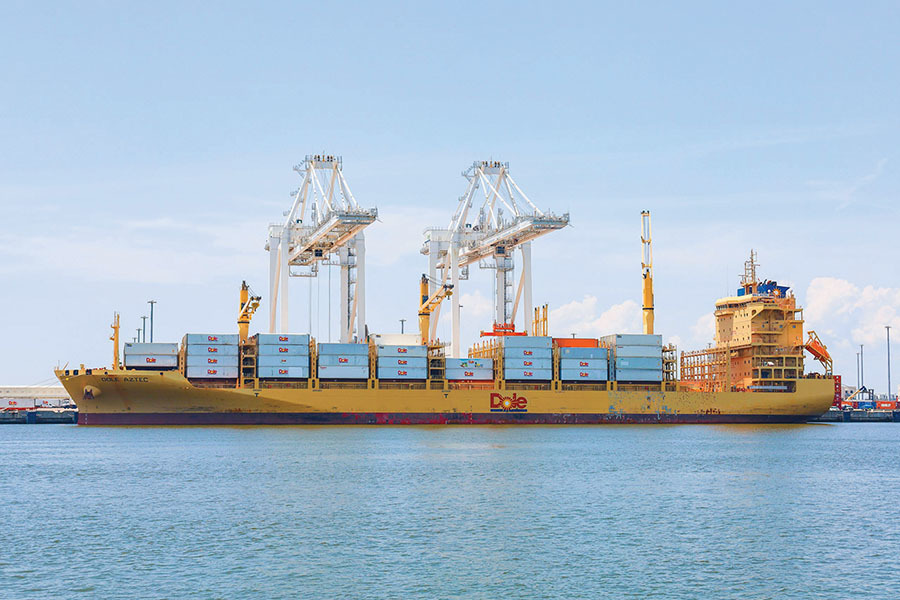
Port of Gulfport, Mississippi, is one of the most diverse ports on the Gulf. Its lines of business range from containers and fruit to military cargo and casinos. That level of diversity, said CEO and Executive Director John Nass, can be a ticket to success. “Diversified cargoes and activities create heavily diversified revenue streams,” he said.
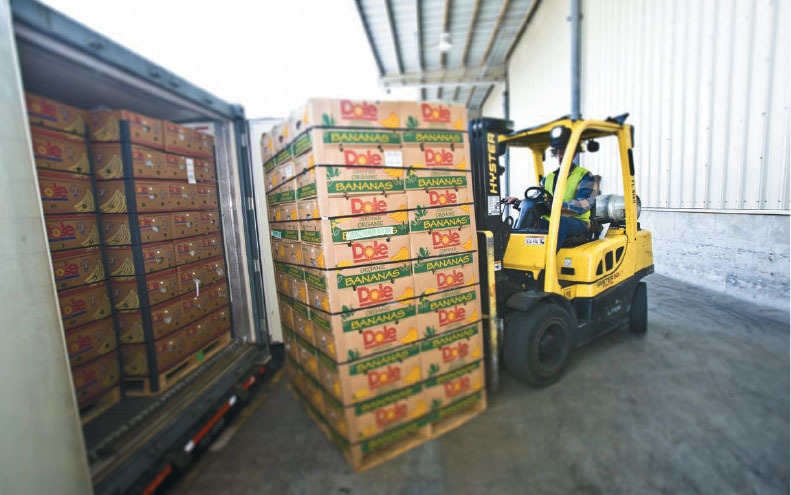
For its customers, “Gulfport is an important alternative to other ports that are growing too fast or that have gotten congested. We are open for business now. We offer more personalized service to carriers. Dole has been with us for 60 years for a reason. We give customers true southern hospitality,” and help customize solutions for their needs, said Nass.
Keeping Costs in Line
In a recent article published by Maersk, entitled, “5 reasons to implement supply chain diversification” the leading carrier said diversified supply chains can help manage cost while introducing scalability and flexibility. Maersk said, “Having multiple suppliers can lead to better pricing through competition and visibility.”
There is always a cost associated with cargo delays and disruptions. A more resilient supply chain is one that avoids costly delays.
Revitalizing after Catastrophe
Port of Gulfport is perhaps uniquely qualified to talk about supply chain resiliency. Almost exactly 20 years ago, a catastrophic storm called Hurricane Katrina hit Gulfport and 28 feet of water wiped it off the face of the earth, Nass said.
“It’s a risk ports on the Gulf face. The port was devastated, but we made lemonade out of that lemon,” Nass said.
With considerable support, the port was rebuilt. This time around, it was built with resiliency and durability in mind.
“We are now very much prepared. We prepared with infrastructure, with systems, with back-ups. We collaborate with agencies, first responders, inland yards, tenants, and others. We plan,” said Nass.
Responding to the Market
When a hurricane hit Florida last year, Gulfport showcased the value of flexibility. It was able to unload perishable fruit from a carrier that was on its way to Florida, allowing the cargo to be trucked to market while the cargo was still fresh. While helping carriers manage their risk might be all in a day’s work for Gulfport, not every port would have the infrastructure and capacity to do so.
Markets are fickle. Fortunately, companies that employ diverse supply chains may be able to respond more quickly to customer needs or take advantage of emerging opportunities.
Marler said that her port is a new alternative for certain customers. The port’s location on the northern U.S. West Coast and on global shipping routes is a draw. “The Columbia River offers the most direct route from Canada to Asia and the Pacific Rim, and the Port of Vancouver USA’s location on the river and connection to the West Coast’s major highways and Class 1 rail offer efficiency and convenience to shippers and businesses.”
Nevertheless, the thing that makes her port stand out is something more than offering the right kind of connectivity, or state-of-the-art facilities; it is an institutionalized focus on building solid customer relationships. “Our dedicated team helps customers navigate business finance, regulatory, and community dynamics,” she said, and added, “Our goal is to be as nimble as possible, capable of maximizing opportunities and navigating through disruptions to remain a leading portal for the supply chain on the U.S. West Coast.”
Nearshoring for Resilience
Many industries are drawn to nearshoring to build resiliency into their supply chains. Recent tariff uncertainties have added value and urgency to the concept. Seaports that are ready to leverage market developments like this can attract cargo and be part of a more resilient supply chain for customers.
Nass said Gulfport is incredibly well poised to assist with nearshoring. With a 2.5-day sailing from Mexico and speedy inland connections, “We can help get cargo from Mexico to Chicago in four days. In the past, that was practically unheard of,” said Nass.
Renowned economist John Martin of Pennsylvania-based Martin Associates confirmed nearshoring can provide valuable advantages within supply chains for American companies.
“Gulf coast ports, and even east coast ports, will have greater opportunity. It is usually much less expensive to bring cargo into these ports than to cross land borders, and some ports have a good backhaul market by water,” said Martin. He named Miami, Gulfport, Tampa, Manatee, Pascagoula, and Houston, among others, as ports that have noticeable nearshoring cost advantages for cargo moving by water rather than by truck or rail.
Going Greener
Diversity and sustainability can be partners in a supply chain. Different suppliers have different levels of environmental commitment. Diversified supply chains can be more sustainable.
In a widely referenced 2018 study by Nielsen, 81% of consumers from around the world said they felt strongly about companies implementing environmental initiatives. Cargo owners and supply chain members have taken note. Most global companies now recognize that eco-friendly practices can help save costs while enhancing corporate citizenship and brand reputation.
Getting Innovative
Nurturing data-driven decision making, technology, and innovations improves supply chains, Marler said. “Our port works diligently to keep up on what’s happening in the markets, and that means we invest in obtaining market intelligence data so we can anticipate possible changes and shifts as early as possible — and reposition as necessary,” she said.
That might dictate investment in new technologies, like the port’s shore power, or its zero-emission mobile harbor cranes, or its new Enterprise Resource Planning system, which will unify port operations information on one platform, providing instant visibility into cargo, lease, and operational data. “We’ll be able to coordinate more efficiently with tenants, shippers, and logistics partners. We’ll also be positioned to make informed decisions on service pricing and commodity diversification,” Marler said.
Bottlenecks are Nobody’s Friend
Diversified, resilient supply chains support long-term growth by ensuring stability and adaptability in changing markets. They make it easier to manage risks, cut costs, respond to the vagaries of global markets, promote sustainability, and foster innovation.