Strengthening America’s Maritime Future: A Q&A with AAPA President & CEO Sang Yi
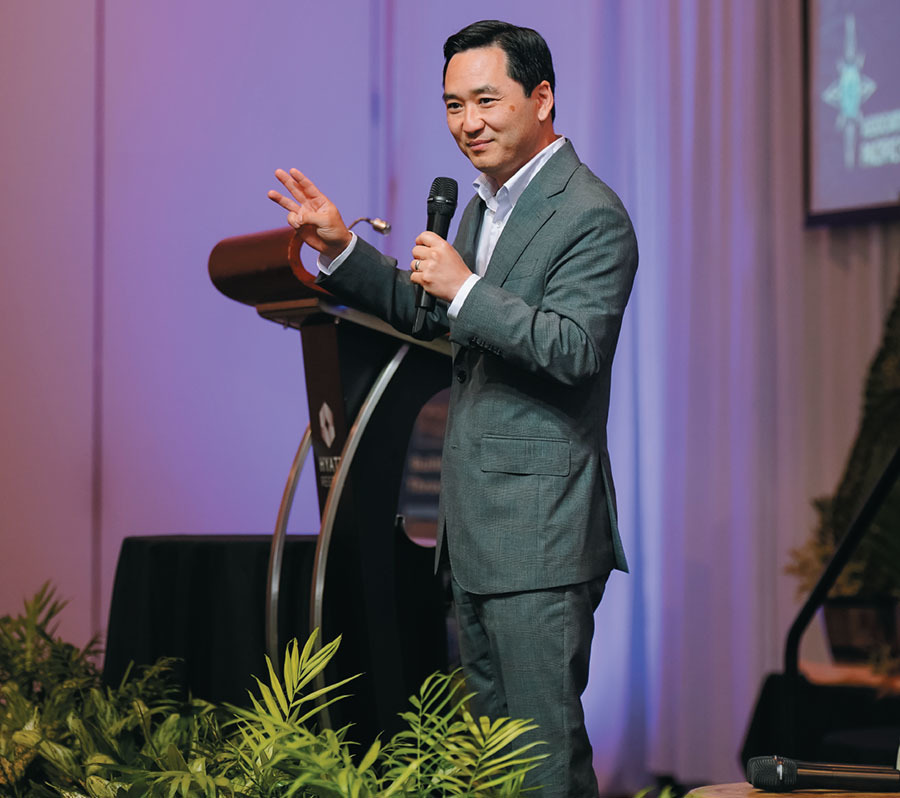
In this conversation, American Association of Port Authorities (AAPA) President & CEO Sang Yi reflects on his transition from decades of public service into leading the nation’s premier port advocacy organization. Drawing on his maritime background, federal leadership experience, and a service-driven philosophy, he outlines his vision for strengthening industry unity, elevating maritime awareness, and positioning ports at the center of national economic and security priorities. His answers reveal both deep respect for the industry and a clear strategy for how AAPA can serve as a convenor, intelligence hub, and catalyst for restoring U.S. maritime competitiveness.
You’re relatively new in the CEO role. What drew you to AAPA and made you leave government service for the first time, and what do you see as your top priorities for the association over the next few years?
After more than 20 years in federal service — in the executive branch, the legislative branch, the military, and local government — I reached a point where I was ready for my first private-sector role and wanted it to still feel purposeful. When the opportunity at AAPA came up, it felt like an incredible chance to keep serving while staying connected to something essential to our country and to global commerce.
I’ve seen firsthand how little public awareness there is of ports and maritime activity, and how fragmented the industry can be. Ports, carriers, operators, and trade associations often act independently, which makes it harder for policymakers to understand which policies could help, harm, or actually move the needle. Ports are uniquely positioned to bring clarity and unify that voice, and that’s a big part of what drew me here.
Looking ahead, my priorities are to make AAPA the premier advocacy organization and a trusted thought leader — helping our members navigate rapidly changing trade, regulatory, and technological conditions. I also want AAPA to serve as a convenor and as the industry’s intelligence network, a place where ports can share best practices, so no one has to solve every problem on their own.
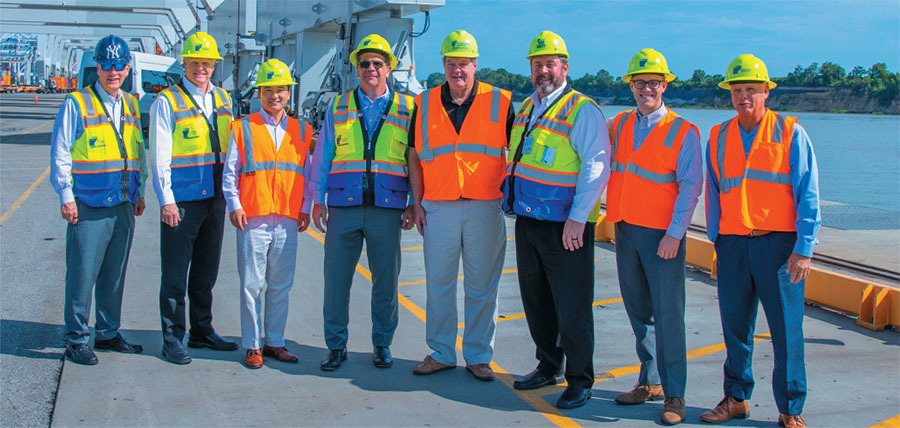
How would you describe your leadership philosophy, and how do you think it will shape AAPA’s direction?
My naval training taught me that being responsible for people doesn’t make you the boss: Leadership is service. In this role, I work for our members, our staff, and the industry.
I often think about a moment with my daughter when she was four. We were driving past a city vehicle, and she assumed that because I was a city councilman, I must be the boss of the driver, and really of every municipal employee. I stopped the car and explained that it was actually the opposite: Every one of those people was Daddy’s boss. That’s how I see leadership. It’s not about authority; it’s about serving others.
To me, leadership is an inverted pyramid: I’m at the bottom, supporting everyone above. That mindset shapes how I approach AAPA: no ego, full service, and a commitment to the industry’s broader mission. Maritime isn’t like other sectors; this isn’t about selling more candy. It’s about our nation’s economic prosperity, our national security, and ultimately restoring America’s maritime strength by elevating the role ports play as the hub for trade, tourism, and transportation.
What are the biggest challenges facing port authorities right now, and how is AAPA positioned to help members navigate them?
The first thing that comes to mind is how quickly the trade, regulatory, and geopolitical environments are shifting. Ports need certainty and consistency to plan and build major infrastructure projects, and that’s hard to achieve when the landscape keeps moving. I’m incredibly appreciative of federal programs like PIDP (last April’s $774 million was a record-breaking amount), but I’m also concerned about the uncertainty around future funding levels and authorization.
A recent William & Mary study found that China invested about $24 billion in overseas port infrastructure over the past 25 years. When you compare that to US investment levels, it’s clear we’re not keeping pace. I’ve called current funding woefully inadequate, and that’s why AAPA is pushing hard for predictable, sustained investment. I plan to stay closely engaged with MARAD, the Army Corps, the White House, and others on port and maritime policy, including dredging and channel maintenance.
Helping our members navigate uncertainty is central to our mission. I’m committed to convening ports, carriers, shippers, government partners, technology companies, and communities so we can share best practices, strengthen connections, and align long-term planning across seaport systems and supply chains.
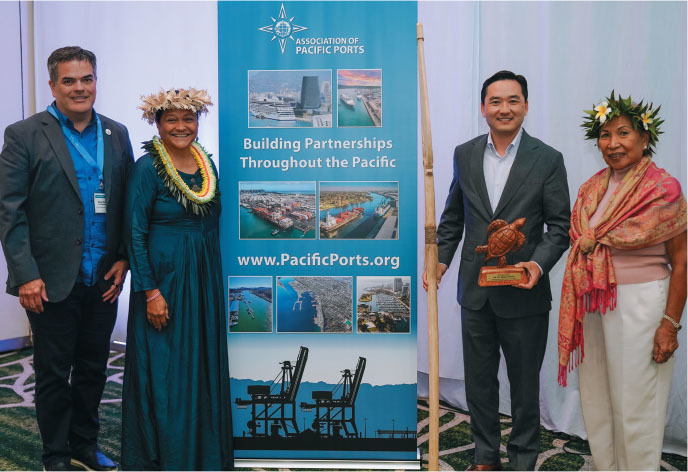
Where do you see the biggest opportunities for growth or innovation in the ports industry over the next five to ten years?
A few opportunities stand out as both pioneering and unifying. One of the most significant is small modular reactor (SMR) technology — not just for propulsion, but as a reliable power source for port operations. We’re already engaging with the Maritime Administrator, several ports, the American Bureau of Shipping’s US Center for Maritime Innovation, and other innovators on SMR deployment because the future energy demands of electrification, shore power, and modernization are enormous. Ports need long-term, stable power to support decades-long infrastructure planning, and SMRs offer the kind of resilience, certainty, and national-security alignment that could fundamentally strengthen the port industry across the Americas.
Another major area is domestic crane manufacturing capacity, or the lack of it. I see this gap as a strategic opportunity that AAPA can advance. Expanded PIDP funding would support modernization projects, and I believe Maritime Prosperity Zones could spur a whole new level of investment and innovation.
Overall, I see AAPA pushing full steam ahead on technologies and focused policies that will shape ports for the next decade.
How is AAPA thinking about issues like infrastructure investment, workforce development, and supply chain resilience?
Workforce development is one of my central priorities. Our members have shown strong support for AAPA’s PPM program, and it’s clear we need to build the next generation of port leaders. We’re also seeing growing interest from recruitment firms and consultants who are offering succession-planning services, which tells me the entire industry is feeling the pressure. Workforce challenges exist all along the supply chain, so a holistic initiative would be incredibly valuable.
One of the biggest issues is simply the lack of interest in port and maritime careers. Reaching students in college, or even in high school, is almost too late. We need to start building awareness and pride in maritime work as early as elementary school if we want long-term change.
I remember a conversation during my first days as Acting Maritime Administrator. My counterpart from Denmark, a country with centuries of maritime strength, told me they were struggling to attract workers too. Hearing that reinforced just how global and urgent this challenge is, and it pushed me to focus even more on finding solutions.
I’ve already identified opportunities to engage veterans and labor partners, and I recognize that workforce needs vary widely across different types of ports, especially operating versus landlord ports.
Beyond workforce issues, I want AAPA to re-establish itself as a thought leader through research, surveys, and policy guidance, so that federal leaders turn to AAPA for counsel on maritime and port matters.
What would you like AAPA members to know about how the association plans to support them under your leadership?
AAPA will keep delivering the core products our members rely on, such as our venerable salary survey, while expanding our engagement in emerging areas like SMR technology so ports have a strong voice as the federal government develops regulatory frameworks. We also need greater influence over dredging windows and schedules, because those decisions directly affect the channel deepening and widening projects that are essential to port growth.
Security is another priority for me. AAPA is monitoring drone legislation, submitting comments to the FAA, and highlighting the risks that unauthorized drones pose to ports, passengers, and cargo. Seaports are the hub and conduit for everyday and critical cargoes, including energy supplies for entire nations, and I believe one of our greatest responsibilities is ensuring ports across the Americas have the strength and stability to remain resilient in the face of unexpected challenges.
For our U.S. members, I’m committed to ensuring ports are represented in federal decision-making and that we’re proactively addressing evolving operational and security challenges.
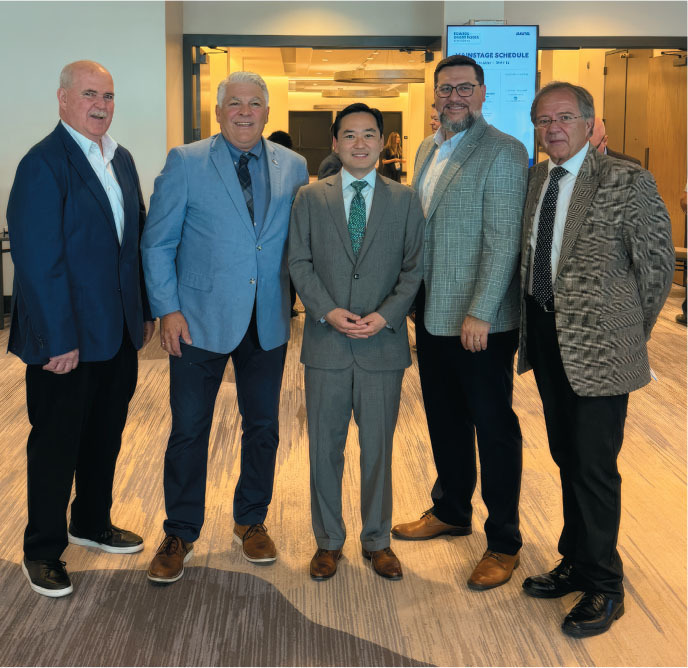
Are there any new initiatives, programs, or partnerships members should watch for in the coming year?
We’re expanding our partnerships, including a newly signed MOU with the International Propeller Club and growing collaboration with the American Bureau of Shipping. I want to broaden cooperative agreements with other federal agencies so we can elevate seaport influence in Washington and strengthen the industry’s voice.
Beyond advocacy, I want AAPA’s Foundation for Seaports of the Americas to grow into an invaluable member-to-member resource. The foundation already helps ports assist one another financially during emergencies, but funding isn’t always the full picture. I see a real opportunity for the foundation to facilitate peer-to-peer assistance in additional ways (such as emergency support, technical guidance, shared contingency planning, or coordinated response), so that ports can rely on one another when facing urgent challenges.
How is technology (AI, digitization, sustainability efforts) reshaping the way ports operate, and what role should AAPA play in that shift?
AAPA will continue helping smaller and mid-size ports adopt emerging technologies, while also creating opportunities for larger ports with more robust programs to share knowledge and strengthen the entire industry. Supporting our members with energy innovation and emerging security technologies, especially cybersecurity, is a major priority for me.
I believe ports must be seen not just as infrastructure, but as national assets. When positioned in that light, federal investment becomes an imperative. Air-space security is also becoming increasingly important, and we’re working with FAA, MARAD, and congress to advance drone-related security legislation. I see that work as essential to protecting ports from evolving threats and strengthening long-term resiliency.
We’ll continue advocating for projects that harden our ports through PIDP and other federal grants. My goal is for AAPA to be a powerful catalyst for sustainability and resiliency enhancements across the industry.
AAPA’s network includes ports across the Western Hemisphere. How do you approach the diversity of member needs across different countries and market sizes?
AAPA represents every major U.S. gateway port, as well as regional ports, inland ports, and Latin American, Caribbean, and Canadian ports, and each has its own distinct needs. I often reference the old adage, “If you’ve seen one port, you’ve seen one port,” and the same is true for regions, but, even with all that diversity, there are shared priorities that connect our members across the hemisphere.
We’re committed to our regional LATAM program, which almost operates like a franchise in the way it tailors support to Latin American ports.
I’m also focused on building knowledge of trading corridors and port connectivity so we can identify initiatives that benefit groups of ports, not just individual ones. There is strong interconnectivity across port ranges: southern and Gulf ports look to Latin America, while northern ports focus on Canadian partnerships and shared trading corridors. My goal is to make sure AAPA understands these regional dynamics and supports members in ways that reflect their unique circumstances while strengthening the broader hemispheric network.
Is there anything about your background or approach that you think would surprise members, or that you want them to understand about you as they get to know you in this role?
I immigrated to the United States from Seoul when I was four, at a time when ESOL programs were limited. I spent my early school years quietly observing my new world, and that experience gave me strong observation skills and a level of comfort moving among groups with very different needs. Those skills have stayed with me throughout my career in the maritime field, as a City Councilman, and during my years in Congress.
My parents taught me a deep gratitude for this country. My father used to say that repaying our debt meant serving, and that idea eventually led me to the U.S. Merchant Marine Academy. I’ve never had to question my purpose. Service has always been a constant in my life, and I see my role as AAPA CEO as a continuation of that commitment. This is a place where I can keep serving while advancing a mission that is critical to our nation, the entire hemisphere, and the world.