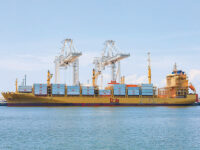
Feeding the World, Fueling the Economy, Fortifying the Future
By Julia Fisher-Cormier, Executive Director, Port of South Louisiana

America’s ports are essential infrastructure. They are where national policy meets global commerce, and where decisions about investment, reliability, and capacity shape economic outcomes far beyond the waterfront. The Port of South Louisiana encompasses 54 miles of the Lower Mississippi River Ship Channel with deep roots in agriculture, energy and manufacturing. Our responsibility is clear: move the commodities that feed the world, strengthen our economy in Louisiana, and ensure our infrastructure remains resilient and competitive.
As I begin my tenure as executive director, our strategic focus centers on three priorities that reflect both the Port’s core mission and its role in national trade policy: feeding the world, fueling the economy, and fortifying our infrastructure.
Feeding the World
Few policy objectives are as fundamental as food security. The Port of South Louisiana plays a direct role in advancing it. Through seven of Louisiana’s nine grain terminals along the Mississippi River, the Port serves as a primary export gateway for U.S. agricultural products, connecting American farmers to global markets.
In a world marked by population growth, supply-chain disruption, and geopolitical uncertainty, reliable agricultural exports are not optional — they are strategic. Maintaining efficient, high-capacity grain movement protects U.S. credibility as a supplier and ensures global markets can depend on American production. The Port’s scale, location, and operational focus allow it to move grain consistently and competitively, reinforcing a system that benefits producers, consumers, and trading partners alike.
Fueling the Economy
Beyond agriculture, the Port of South Louisiana is a central driver of economic activity in one of the nation’s most important industrial corridors along the Mississippi River. Energy and petrochemical operations remain foundational, supporting supply chains that power households, manufacturing, and transportation across the United States.
At the same time, the corridor is evolving. New industrial development and emerging economic activity are reshaping how ports contribute to regional growth. For policymakers, this underscores an important point: ports are not static assets. When properly supported, they adapt to changing markets while continuing to anchor legacy industries. The Port’s role is to ensure that growth — whether traditional or emerging — is supported by safe, efficient, and predictable maritime infrastructure. Make no mistake, Louisiana is leading the way.
Fortifying Our Infrastructure
To put it simply, Infrastructure policy is economic policy. The competitiveness of U.S. ports depends on sustained investment in facilities, connectivity, and resilience. At the Port of South Louisiana, fortifying our infrastructure means building and funding projects that allow us to meet current demand while preparing for future growth.
This work requires long-term planning, strong public-private coordination and collaboration amongst Louisiana’s ports as a whole. Ports operate on generational timelines, and the consequences of deferred investment are felt across supply chains. Modern, well-maintained infrastructure strengthens reliability for shippers, supports workforce stability, and positions the United States to compete in a global logistics environment that is increasingly complex.
The Port of South Louisiana’s priorities reflect a broader truth about ports nationwide: when ports are strong, the economy is stronger. By focusing on food security, economic growth, and infrastructure resilience, we are advancing not only the Port’s mission, but a national interest in efficient, reliable, and forward-looking trade infrastructure.