Trying to Predict the Future in a Shaky Year
By Tom Ewing
In a video summarizing its work on behalf of international shipping, the maritime group BIMCO highlights its efforts to prepare for new challenges.
“We’re always looking over the horizon,” BIMCO’s narrator explains, “so our members are fully prepared for what comes next.”
In mid-year 2026, that metaphor is sobering. It’s hard to think of a time when the ability to look over the horizon is more urgently needed. And just as critical: the ability to make sense of a wild and rapid mix of events and timelines.
Some approaching events, particularly armed conflicts, require split-second decisions. Others, about climate and alternate fuels, for example, or trying to keep up with tariff and trade policies allow a bit more breathing room. The challenge is they are all happening at the same time. Each issue demands resources and focus now. Distraction has consequences.
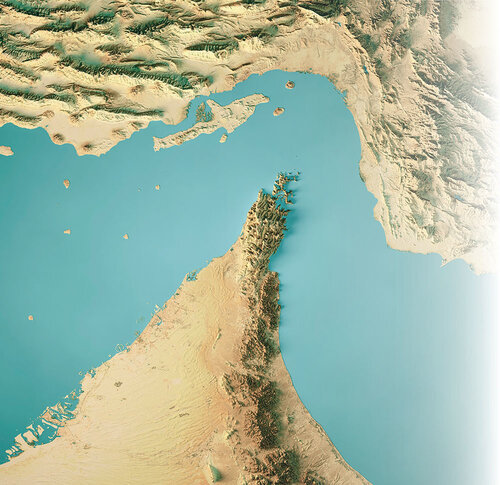
All crises end, although sometimes not until a framework or landscape is shattered. Fortunately, global events are not at that drastic point yet. As this is written, even the Strait of Hormuz crisis has settled down somewhat. But for ocean shipping companies, is that meaningful? Does that mean, “Oh, good, now we can just pick up the pieces and carry on?”
The following report summarizes some recent insights and comments among shipping executives who are asking, really are forced to ask: are there lessons from today’s very rough waters, and, if so, what are they?
Insights: Shipping and the Hormuz Crisis
Hapag-Lloyd, the giant German international shipping company, has a website podcast called “Straight Talk,” featuring interviews with CEO Rolf Habben Jansen. The episode from May 9, with maritime journalist Janet Porter, focused on Middle East conflicts.
Jansen commented that the most pressing fallout from Hormuz for his company has been economic and financial, not the impacts on H-L’s network. The Hormuz crisis, he said, is, geographically, relatively isolated. However, “the impact on overall cost is huge.” In early May the price of maritime fuel had gone up by $300 to $400 a ton. “We bunker over 100,000 tons/week,” Jansen noted, “that easily gets you to the extra $50 million that we’ve had to pay since the crisis started.”
Jansen was asked whether H-L is considering reconfiguring its trade routes, to become less dependent on the Strait’s regional ports, Jebel Ali Port in Dubai, for example, the world’s 9th largest container port. His reply: not yet. Plus, he noted the realistic lessons from past crises — that normal patterns continue after a situation stabilizes, if stability can be maintained.
When asked if the Hormuz crisis initiated a broader review of other global risks, Jansen again referenced network resilience. Plus he noted geographical reality: “If we want to serve the countries in the upper Gulf, we have to go through the Strait, there simply is no other way.”
One critical issue going forward, Jansen said, is the impact on seafarers and how recent dangers may affect seafarer retention and recruitment. “We need to do whatever we can,” he said, “to make (conditions) as safe as possible for seafarers, to emphasize the positive attributes linked to working as a seafarer.”
Once the Hormuz crisis is settled, Jansen expects it will take six to eight months to resolve the litany of logistical issues among ships, ports and containers; a timeframe he believes will move into the first part of 2027.
Jansen is more optimistic about Hormuz than the other regional devil: Suez. “When Hormuz is settled,” he commented, “we will start looking again at a step-by-step return to Suez, but for now all of that is up in the air.”
Coface for Trade is a global company specializing in credit risk management, assisting international companies navigate the business of commercial trading “in an uncertain and volatile environment,” surely an apt descriptor for 2026.
Eve Barre is Coface Sector Economist and Middle East expert. She was asked by Seaports for her take on 2026 crises and possible moves forward.
Barre said that when Hormuz reopens, global shipping traffic will not immediately return to normal. She noted that oil exports, via tankers, cannot quickly restart. “On the one hand,” she explained, “oil production cannot be ramped up instantly. On the other, military damage will continue to weigh on output.” She foresees sustained pressure on oil production, keeping bunker fuel prices elevated.
Barre expects reopening will cause congestion in regional and Asian ports, likely causing disruptions to shipping schedules, delaying normalization of trade flows.
With a prolonged closure, Barre expects ports outside the Persian Gulf would expand significantly, facilitating trade between Gulf countries and the world. “This could notably benefit the Saudi port of Jeddah,” she commented, “the Omani port of Salalah, as well as ports beyond the Gulf region, such as those in Pakistan or Djibouti, which have already recorded increased vessel traffic since the onset of the conflict.”
Wait: Is 2026 an Outlier?
It’s possible that the horrific events of 2026 will not, in the long run, define a new trajectory for ocean shipping, that different, but more accurate, and influential, realities were hidden by the headlines.
Those more optimistic insights are presented in an interview posted by Maersk last December. True, that preceded the current Hormuz crisis, but the reality of Middle East dangers nevertheless informs the comments of the two officials interviewed: Johan Siskart, Chief Product Officer at Maersk and Lars Jensen, CEO of the consultancy Vespucci Maritime.
Siskart cited three emerging and foundational trends in 2026:
- Volatility or geopolitical instability “will stay with us and continue to define shipping in the years to come,” Siskart predicted. His reference was not just to military confrontations. Maersk customers, he said, include tariffs and supply chains when referencing volatility and instability.
- Decisions and challenges about how maritime transport aligns with ports and landside networks.
- Decisions about “green fuels.” Siskart commented: “It’s an area surrounded by uncertainty,” adding that decisions about new ships establish a 30-year commitment. Questions about alternative fuels need to be settled sooner, not later.
Lars Jensen referenced another slate of issues. He noted the need for a focus on day-today events, but he added: “I would differentiate between what I would call ‘signal and noise.’ The noise, to some degree, is also the volatility.” He said that “volatility is linked to the dumpster fire of geopolitical issues.” Those issues — from US trade politics to Middle East flare ups — create demands — but addressing those problems does not mean that maritime issues are resolved.
He saw two long-term trends for 2026:
- Shippers are heading into an oversupply cycle. But he added, this is a challenge “we have seen before,” noting its cyclical nature.
- Asia and Africa will play an increasing role in global trade, driven by economics and demographics. For the rest of this decade, he said, new forces will start a “positioning game between all the different supply chain providers.” Asian and African growth “will change the competitive landscape,” he predicted.
Jensen predicted 2026, in hindsight, will be an “odd year out,” that absent political-military turmoil, 2026 will be a “ramp up” for more substantive changes in 2027.
New Shipping Routes?
Recall H-L’s Jansen’s reply that service to upper Gulf customers demands the Strait of Hormuz. Implicit in that discussion is the idea that there are other ways to transit the world’s oceans, routes avoiding despots and conflict. Passage through or close to the North Pole, for example, has been raised as a way to get from Asia to Northern Europe and North America. Some people say that warming ocean temperatures have melted the Arctic ice to such a degree that polar transit may soon be an option.
Not likely. That’s the assessment of an April 2026 study, also by Coface.
Coface’s study asks “Will Arctic shipping routes really reshape the map of global trade?” An initial reference is to Middle East flashpoints. Coface notes “Arctic routes are attracting growing interest as potential alternatives.” However, Coface concludes: “Over the next five years the commercial potential of Arctic routes will remain limited. Whilst they do not constitute a credible alternative for container transport, these routes may nevertheless offer significant benefits for certain commodity flows (including crude oil and gas), particularly US and Northern European exports to Asia.” Containerized transport remains uncompetitive despite shorter distances. Potential pathways are relatively small, limiting vessel size and distorting economics of scale.
Last July, the Congressional Research Service published a report “Changes in the Arctic: Background and Issues for Congress.” The authors note: “The search for a shorter route from the Atlantic to Asia has been the quest of maritime powers since the Middle Ages.” CRS’ assessment aligns with Coface’s report. Indeed, changing Arctic conditions may result in increased commercial activity — e.g., oil and gas exploration — but scheduled cargo transport faces persistent and long-term challenges, including extreme cold, random sea ice floating into possible channels, the absence of regulations and navigation infrastructure, and, of course, search and rescue capabilities. Arctic routes remain on a very distant horizon.
Talking About Climate
Shipping executives frequently note that maritime vessels carry upwards of 90% of the world’s cargo but emit only about 2.5% of global CO2 emissions. They further note that this is the only sector supporting self-imposed taxes to help drive investments in non-fossil fuels. Fixing those new fees was supposed to happen last October at the IMO’s extraordinary MEPC session to ratify the net-zero climate accord. Readers will recall that confirmation was postponed, held for further study, but to be addressed again this November. Readers will also recall that the US led the oppositional moves that forced a net-zero postponement.
In April, the international standards group DNV posted a discussion about maritime trends with Carl-Johan Hagman, managing Executive Officer of NYK Group Europe and Vice Chairman of the International Chamber of Shipping.
Not surprisingly, the net-zero proposal came up. Hagman commented that, indeed, shipping “is a hard-to-abate industry.” But not impossible, noting his work with companies “that have run vessels on methanol 15 years back. The technology is there, but we don’t have the systems to support it.” He added that “shipowners are quite affluent right now and I think we have a moral obligation to do better — and there’s certainly the potential to do so.”
Hagman said that without regulation, maritime CO2 emissions will not be addressed because “there is very limited propensity among end customers to actually pay for it.”
Importantly, in May, US DOT/ MARAD published a request for proposals for a targeted cost analysis of the netzero framework centering on the specific policy mechanisms and economic consequences for the United States. (See the related article Growing Ammonia Use, Growing Responsibility on page 22.)
Coface’s Eve Barre noted that the disruption in Hormuz could have accelerated the green transition. She noted though that most alternative maritime fuels remain heavily dependent on the Gulf and/or are derived from fossil energy sources; methanol and ammonia, for example, rely on fossil energy inputs and, in some cases, on the Strait of Hormuz. “From a longer-term perspective,” she commented, “scaling up the production and use of green hydrogen, green ammonia, and biofuels, currently used only very marginally, will be essential to achieving a more resilient and sustainable maritime energy transition.”